Japanese Term for Doing Something You Know Is Wrong

'Say what?' 20 Cool Words that Only Be in Japanese
Date published: 15 October 2020
Terminal updated: 17 February 2021
In that location are loads of funny, colorful, and cool Japanese words that but don't have a direct translation into English.
Japan has a long and rich history, and its famously complex language reflects that. The language of a country can requite yous perspective on and insight into the civilization and attitudes of the people that use information technology.
Naturally, at that place are a plethora of words in Japanese that simply don't have a one-to-ane English equivalent. They range all the way from the hilarious to the poetic to the spiritual.
These cool Japanese words are all sure to put a smiling on your confront, and most if not all will have you wondering, "why don't we take a give-and-take for that in English language!?"
1. KY (adj.)

The English letters 'KY' are used equally a shorthand for the Japanese phrase "kūki yomenai", meaning "can't read the room," or more literally, "tin can't read the air." Yous can say a person is KY if they are socially awkward or inappropriate.
Japan has a very loftier context culture, which means that a lot of social interactions involve suggesting things indirectly, inferring implied meaning, and not speaking frankly or saying things outright.
If this is at odds with your own cultural background, you might discover Japanese conversation a niggling challenging to navigate at first! In the meantime, y'all may, unfortunately, be a footling on the KY side as far as natives are concerned.
two. 木漏れ日 Komorebi (n.)

This beautiful word refers to the light that filters through the trees, dappling the forest floor. It'southward a poetic word that evokes imagery of a peaceful, natural scene. Next fourth dimension you're out for a stroll in the woods, accept a moment to appreciate the gently shifting komorebi and marvel at the fact that there'south no word for it in English!
three. わびさび Wabi-sabi (n.)
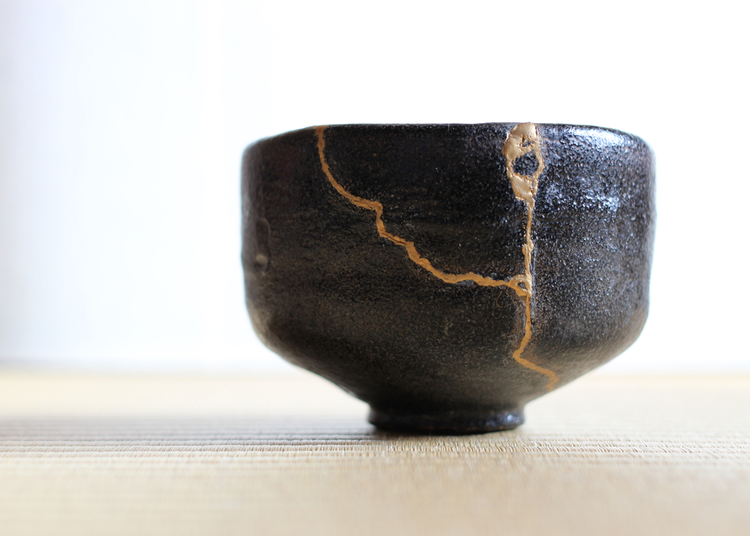
Wabi-sabi is the very Japanese style of art and aesthetics emphasizing simplicity and restraint. Information technology is an appreciation of the beauty of imperfections and impermanence. Things and art that autumn into this category are generally very elementary but inspire a feeling of calm. Wabi-sabi brings to heed things like humble shrines and roughly made pottery.
4. 別腹 Betsu bara (n.)

Anyone with a sugariness molar can relate to the mystery of the betsu bara, or "divide stomach." This handy noun refers to the mysterious extra room you lot notice you have for dessert after a large repast.
While the science backside said phenomenon is actually known, this amusing word is perfect for explaining sheepishly why no, you're non done eating cheers very much, and you lot don't treat the judgment. (OK, maybe 'dessert tum' is somewhat similar, only now you know Japan has a word for it too!)
five. 森林浴 Shinrinyoku (n.)

Literally "forest bathing," shinrinyoku is the act of going into a forest to unwind and breathe in the fresh air. The refreshing feeling of spending time in nature and away from civilization is widely known to exist good for your mental health, so how is information technology that we don't have a word similar this in English language? If you haven't still, definitely try some shinrinyoku therapy; it is free, afterwards all.
half dozen. 積ん読 Tsundoku (due north.)

Tsundoku is fabricated up of the words "tsun," here meaning "pile upwardly," and "doku," meaning "to read." Book lovers are probably all guilty of this one, as information technology refers to the human action of buying lots of books and not reading them, leading to a pile of unread books.
If yous've merely realized that you've got a bit of a tsundoku habit, let this be a sign that yous should crack open up a volume or two!
vii. シブい Shibui (adj.)

This super-specific adjective is used to depict something or someone that has aged gracefully and gotten cooler with age. The closest English language equivalent might be to say they've "aged like a fine wine."
Immature people nowadays only love quondam, weathered things like exposed brick or ripped jeans. As an appreciation of all things shibui gets more than widespread, the need for a give-and-take to describe it could potentially follow!
eight. 過労死 Karōshi (due north.)

This night word is somewhat well known in the English-speaking globe these days, only is worth mentioning to understand some of the pressure that has arisen in some corners of the working earth.
Defined as "death from working besides much/overwork," karōshi doesn't only mean dying of stress-induced natural causes; it includes everything from keeling over at your desk because yous've had a center set on to fifty-fifty as far as taking your own life because your chore is too stressful.
A tragic karōshi incident in 2015 got a lot of companies reevaluating the corporeality of pressure existence put on employees. Hopefully, things volition improve soon, and one day this word won't however be around.
9. 紅葉 Kōyō (due north.)
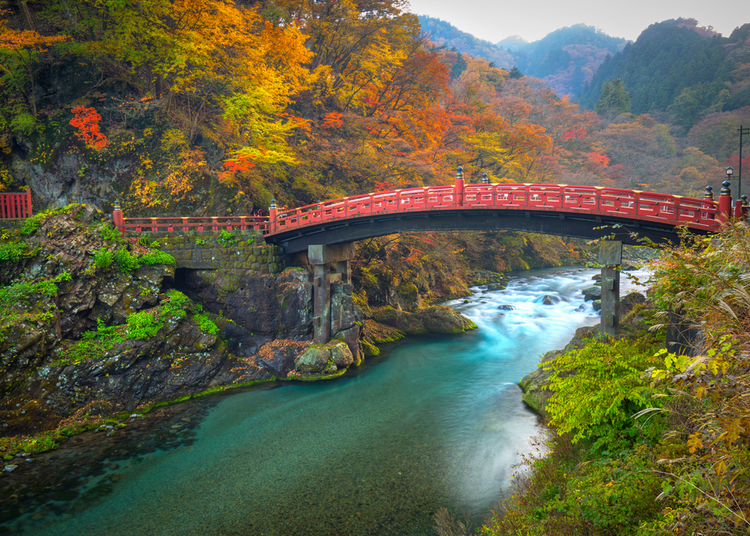
Perhaps best translated every bit "autumn leaf," this succinct word describes the brilliant colors of the leaves in autumn. While not impossible to translate or at least describe, the fall leaves are definitely a bigger deal in Nihon than in well-nigh other places as the rich red foliage here is just so beautiful. Every year people travel far and wide to meet the most gorgeous leaves from the all-time vantage points.
x. 口寂しい Kuchisabishī (n. + adj.)
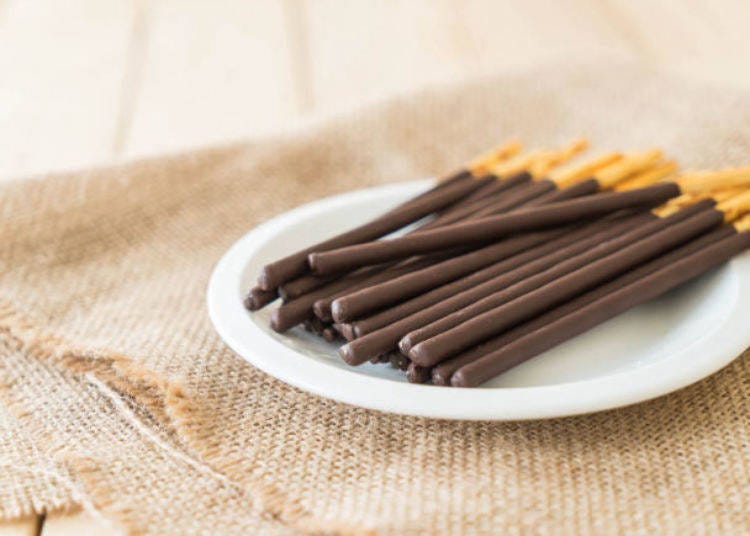
This charming phrase ways that your "mouth is solitary," and describes eating out of boredom rather than hunger. Nosotros've all had an unwarranted treat when at that place'southward been goose egg else to practice, but for some reason just didn't accept quite the right word to describe this absentminded munching until today! Mayhap giving this bad habit a name will make information technology easier to finish...
eleven. 猫舌 Nekojita (northward.)

Japanese people really like their food and drinks to exist piping hot, as in hot plenty to crusade moderate harm. Those lesser mortals who accept to blow on their lava-similar nutrient before eating information technology are said to accept a "nekojita," or a "true cat tongue." This somewhat surreal discussion is said to have originated in the Edo period and is based on the fact that cats (allegedly) don't like to eat hot nutrient.
12. 飲ミュニケーション Nomunication (n.) and たばこミュニケーション Tabaccomunication (northward.)

These words are both portmanteaus. Nomunication comes from the Japanese word "nomu" (potable) and the English word "communication", and refers to "communication while drinking" (specifically alcohol). Tabaccomunication comes from the words "tobacco" and "advice," and unsurprisingly means "communication while smoking."
These can both be seen every bit pretty important in a lot of jobs in Japan. They more often than not refer to things similar talking business over drinks with colleagues after work or having a conversation while on a smoke suspension. While these tin sometimes be effective networking skills in Japan, they certainly aren't recommended for wellness reasons, and it seems younger generations are starting to stray abroad.
13. 三日坊主 Mikka Bōzu (north.)
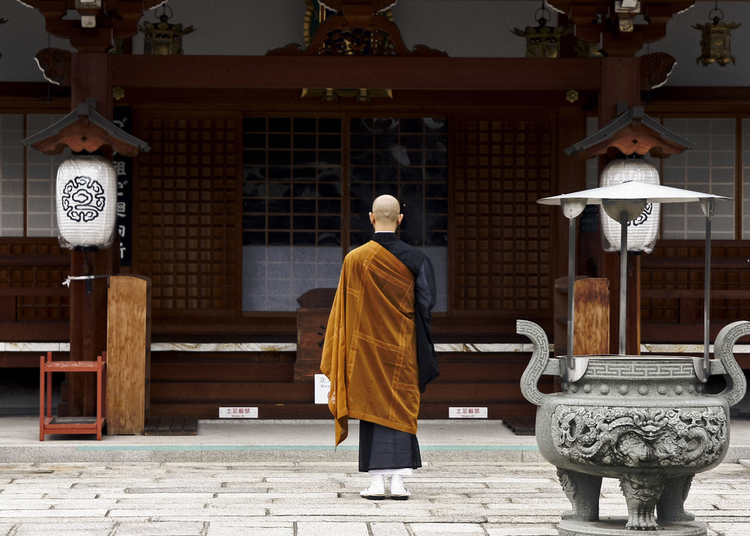
This means "3-day monk," and refers to someone who gives up or gave up on something very apace. It can also have the nuance of initially starting with much passion and intensity, merely to then falter very fast. Buddhist monks have quite a strict routine of extremely early mornings, cleaning, and tough preparation, so throughout history, quite a few people take understandably thrown in the towel early.
14. ありがた迷惑 Arigatameiwaku (n.)

Arigatameiwaku is a combination of the words "arigatai" and "meiwaku," which mean "grateful" and "nuisance" respectively. This is used to describe a very specific situation in which a person goes out of their way to practice something for you that yous didn't desire them to do in the first place. This "favor" ends up causing problems for you, but social norms force you to show gratitude anyhow.
Most people accept probably met someone who was insistent on existence "helpful" even when nobody wanted them to be. For instance, a computer illiterate all the same confident family member who tries to do things for you on your laptop that y'all definitely could have done faster. These are the sorts of people that cause a lot of arigatameiwaku, oblivious to the truthful feelings of everyone forced to grit their teeth and hiss thank you at them.
fifteen. 生きがい Ikigai (n.)

A combination of "ikiru," meaning "to alive," and "gai," meaning "reason," your ikigai is, therefore, your reason for living or purpose in life. Your ikigai could be a hobby you're passionate about, a special person or pet in your life, or some world-changing activism. Whatever it is, information technology gets yous out of bed and lights a fire under y'all, so brand fourth dimension for your ikigai as much as possible!
If y'all've realized while reading that y'all might be a bit of a mikka bōzu, possibly you just oasis't establish your ikigai nevertheless!
16. 木枯らし Kogarashi (n.)

This is the get-go cold wind yous feel in autumn that lets you know wintertime is fast approaching. It means "leafage-shaking wind," and it might take you shaking too! Depending on your feelings about winter, the coming of kogarashi is either exciting or foreboding. Nicely reflecting a lot of Japanese culture, this word is both poetic and practical.
Every language has its own quirks that make them interesting and unique, and Japanese is no exception. With a peachy array of humorous and descriptive words for everyday life, equally well every bit for highly specific situations, learning Japanese is a fun and rewarding way of learning almost a people and culture with a fascinating history and nowadays.
Take this as both a language and a culture lesson in ane; when you lot come to Japan, yous know now why it'south of import not to be KY or a kucharā! And if yous become for some rejuvenating shinrinyoku while you're here, make sure to enjoy the komorebi and kōyō that you might not accept appreciated every bit much earlier they were pointed out to yous.
17. ばたんきゅう Batan-kyū

Batan-kyū has fallen somewhat out of use, but is an onomatopoeia that is mostly written in casual situations rather than spoken, and is used to describe that feeling when you are and so tired yous flop into bed and fall straight to sleep.
"Batan" denotes the "flop", where you fall onto bed, and "kyū" describes the stillness that follows, when you fall straight to sleep. Think most the last fourth dimension you came home from piece of work and without fifty-fifty having dinner you roughshod direct into bed... And then the next thing you lot knew it was morning!
Our last three words take mostly fallen out of use, but are pretty interesting insights into what was popular at the fourth dimension.
eighteen. 物の哀れ Mono no Aware (n.)

Mono no enlightened is very similar to wabi-sabi, but is an older give-and-take that is not used as much now. It refers to appreciating the bittersweet impermanence of something'southward fleeting beauty since nothing lasts forever. It's very in line with the Buddhist thought of being in the moment and letting things go, although it likewise suggests a sort of blahs.
While both of these words are on the more old-fashioned side, the untranslated phrase mono no aware appears in ane of Marie Kondo'due south books, so maybe information technology's time for a improvement?
xix. キープ君 Keep-kun (northward.)

This one might seem a trivial harsh, but a Keep-kun is a placeholder swain who is only kept effectually until someone better shows up. The unfortunate label comprises the English word "keep," and the Japanese honorific "kun," which is a suffix added to men's names to show affection or closeness.
Take centre in the fact that this word is generally only used past older generations and has mostly fallen out of popular employ. Hopefully, that ways there are fewer poor souls being used as Keep-kuns!
twenty. クチャラー Kucharā (n.)

The give-and-take kucharā is a fiddling dated, merely it refers to a person who chews with their mouth open up.
Japanese is absolutely chockablock with onomatopoeias, and the one for the sound made past chewing with your mouth open is kucha-kucha. Add that to the English language suffix -er, as in "thespian" or "worker," and you've got a perfect succinct word for noisy eaters.
While eating with your mouth open up is adequate in some cultures, in Nihon it is considered quite rude. Slurping your noodles, on the other hand, is A-okay! So slurp away and so close your rima oris to chew. Tabular array manners vary a lot from country to land, then brand sure to read up on eating dos and don'ts before jumping on a plane to Japan!
Written past:

*This data is from the time of this commodity's publication.
*Prices and options mentioned are subject to change.
*Unless stated otherwise, all prices include tax.
Source: https://livejapan.com/en/in-tokyo/in-pref-tokyo/in-tokyo_suburbs/article-a0004478/
0 Response to "Japanese Term for Doing Something You Know Is Wrong"
Post a Comment